Loss of Integrity: Abandonment of Values

IMG_1778

1Have mercy upon me, O God, according to thy lovingkindness: according unto the multitude of thy tender mercies blot out my transgressions. Psalm 51:1

David, King of Israel, seems to have had “loving kindness / steadfast love” (hesed) as one of his deep defining values. When he lived divided from this heart value, he drifted and then moved swiftly into disaster.  When he lived close to it we observe him as a diligent shepherd, loyal friend, inspirational leader, and a shrewd king. When he got away from the most noble values formed by God in his character, David fails, commits breathtaking and callus acts of corrupted power, lust, murder, and deceit. (2 Samuel 11 – 12)

When David came to his senses and repented, he relied on God’s, as He is the true uncorrupted One of “loving kindness.”

How is it with you? What are the most noble values rooted deep in your story and heart? Are you living close to them? Have you come to moment in your life when your loss of integrity drives you to the Cross of Jesus for healing and forgiveness?

O God, Have mercy on me, according to your lovingkindness!

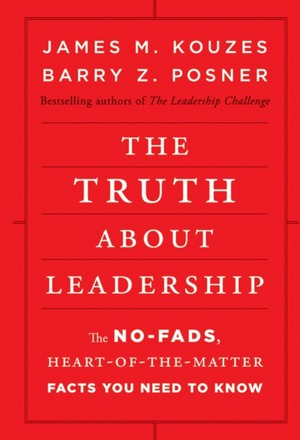
The Truth About Leadership

The Truth About Leadership

I just finished my first read of The Truth About Leadership: The No-Fads, Heart of the Matter, Facts you need to know, by James Kouzes and Barry Posner. Its a good read with plenty to apply in your leadership challenge. I’m getting ready for our Origin Student Leadership Retreat in February and was helped by the book to zero in on the issue of understanding your personal values as key to leadership growth.

I recommend the book. The paragraph below caught my attention as my New Year Resolution Theme is to keep saying yes to Jesus. 

Quoting University of Connecticut President Michael Hogan’s address to graduating seniors they build on Stephen Colbert’s humorous remarks on the need to always remember to say “yes” to the folks offering you a job.

Michael added: So, drawing on Colbert, James Joyce, or Norman Vincent Peale, depending on your reading list, my first word of advice is this: Say ‘yes.” And to summarize Colbert: “…say ‘yes’ as often as you can.” Of course, saying ‘yes’ can lead to mistakes. So don’t be afraid to make a mistake, because, as he continues, you can’t be young and wise at the same time.

Saying ‘yes’ begins things. “Saying ‘yes’ is how things grow.” Saying ‘yes,’ he goes on, leads to new experiences, and new experiences will ear to knowledge and wisdom. “‘Yes’ is for young people,” Colbert concludes. And I agree. An attitude of ‘yes’ is how you will be able to go forward in these uncertain times.

(Kouzes and Posner write) Michael’s advice (and Stephen Colbert’s too) is clearly appropriate for graduates seeking employment, but it’s also especially relevant for leaders seeking to make change happen. You have to say yes to begin things. You have to say yes to your beliefs, you have to say yes to big dreams, you have to say yes to difficult challenges, you have to say yes to collaboration, you have to say yes to trust, you have to say yes to learning, you have to say yes to setting the example, and you have to say he’s to your heart.

Are you ready to say yes to leadership? When you are ready to say yes, doors will open to entirely new adventures in your life. When you are ready to say yes, people will join you on the quest. When you say yes, you will discover your own truth about leadership.  p. 163-164

Habituated Non-Response

It started as a bid for time. Darn those big decisions.

Then it became a desire to ignore the squeaky wheel. Darn those people who don’t agree with you!

Then it became a habit.

Non-response.

An email in the in-box.

A phone-call in the in-box.

But now the good stuff is passing you by.

I know, the leadership books and the entrepreneurial books are telling you to focus on your “best” customers then you will make more money.

But, what will that mean

when non-response becomes your habit?

Here’s what it will mean:


you


Lucky, Ping Pong, & Redeeming the Time

Walk as children of light 9(for the fruit of light is found in all that is good and right and true), 10and try to discern what is pleasing to the Lord… Therefore it says,

“Awake, O sleeper, and arise from the dead, and Christ will shine on you.”

15 Look carefully then how you walk, not as unwise but as wise, 16making the best use of the time, because the days are evil. 17Therefore do not be foolish, but understand what the will of the Lord is. 18And do not get drunk with wine, for that is debauchery, but be filled with the Spirit, 19addressing one another in psalms and hymns and spiritual songs, singing and making melody to the Lord with your heart, 20giving thanks always and for everything to God the Father in the name of our Lord Jesus Christ, 21submitting to one another out of reverence for Christ.
Ephesians 5:9-10, 14-21

“Its just Lucky!”

In University I spent lots of free time at our local BSM building at the University of Georgia. The ping pong and pool tables were privy to scenes that could be used to chart the rise and fall of empires! My friend Lucky would meet me at least once a week. And with each aggressive slap of that ping pong ball he would cry out, “Its just Lucky!”

When we were done, or rather when he was done with me, he would announce, “I’m off to redeem the time.” And away he went.

Lucky sought to live full of the Spirit of God. He was saved by Jesus and experienced healing in a baptist hospital in Nigeria. Afterwards he began to preach the Gospel. By his account he preached by the Spirit of God what he didn’t even “know yet,” as he was just reading the Bible. He loved Jesus and he was conscious of time as a gift from God. Redeeming the time for him, meant to be a part of the Kingdom life and to use his time wisely.

 Redeeming the Time

The Apostle Paul writes that we are to pay attention to our lifestyle, to live wisely “making the best use of time. “

7 Best Use of Time Suggestions:

1. Create habits that save you time and energy.

2. Avoid the tyranny of the urgent by identifying what’s important but not yet urgent. Block out the time to attend to these daily.

3. Divide a page into the key demands or your areas of responsibility and make lists at the beginning of each week; check regularly throughout the day.

4. Attend to the habitual actions that squander your time. As you identify these time wasters eliminate or manage them with different “rules.” For example you could say, “I won’t surf Facebook, Pinterest, etc. until after 9 PM.”

5. Create little “finish lines.” You could divide your day into 90 minute chunks and then take a “recovery break” in order to refuel, recharge, and create the energy for focusing again.

6. Identify “when” (what part of the day) you are best able to focus and put your most demanding work into that time slot.

7. Watch for the “interruptions” in your plan & agenda that actually may be God’s opportunity for you to join Him in the work of His Kingdom.


Redeem the time!

 

The Sluggard’s Dilemma

12Do you see a man who is wise in his own eyes?

There is more hope for a fool than for him.

13 The sluggard says, “There is a lion in the road!

There is a lion in the streets!”

14As a door turns on its hinges,

so does a sluggard on his bed.

15 The sluggard buries his hand in the dish;

it wears him out to bring it back to his mouth.

16The sluggard is wiser in his own eyes

than seven men who can answer sensibly.

Proverbs 26:12-16


Habituated incapacitation.

Learned helplessness.

Underdeveloped executive function.

For all of us,

the condition takes hold when courage is crowded out by anxiety.

Lions in the street.

The future does not seem friendly…

AND

we believe we lack the wherewithal to out-do, out-smart, out-battle a lion.

AND

nobody can teach us how outsmart a pride of lions.

I am the sluggard 

when… “I need to go to work but there might be a lion.”

…when “I need to learn something but there might be a lion.”

A disconnect from the urgency of the present or the future.

Sometimes seen as procrastination. But not exactly because

a procrastinator generally is planning to do the battle

when the urgency of what matters demands it.

The sluggard doesn’t feel the urgency anymore.

Some will explore what’s going on in the brain of a sluggard.

But, what’s happening in their soul?

Where is their hope?

Where is their aspiration?

Where is their circle of hope?

The problem grows deeper as teachability decreases.

Time moves slowly for the sluggard and then its gone.

The lions have won.

What are you doing to make peace with your time devouring lions?

What are you doing to raise the urgency of what matters most?

Watch Richard Turere talk about “My invention that made peace with lions.”