Build a Life that Lasts

IMG_8344

Build a life that lasts

15 Do not love the world or the things in the world. If anyone loves the world, the love of the Father is not in him. 16For all that is in the world—the desires of the flesh and the desires of the eyes and pride of life—is not from the Father but is from the world. 17And the world is passing away along with its desires, but whoever does the will of God abides forever.

1 John 2:15-17

A life that lasts, it is what God wants for us. It is a movement from inordinate concern for our success to delight in our significance emerging in the truth and grace of our Saviour.

The elder John is concerned for the continued growth and development of the disciples of Jesus from their new birth in Christ Jesus, to their growth in His Word to become strong and courageous in character, and then to become reproducers sharing the Father’s heart. But John knows that Satan and the greedy desires of the heart can derail growth. So he commands them: Do not love the world.

The “world” here is not specifically a reference to creation or to people, but rather to the system of belief and thinking, attitudes and actions, that are independent of the Heavenly Father. He knows that we live “in” the world, but he also knows we do not have to be “of” it. Jesus has set us apart, even as He was set apart for the glory of the Heavenly Father. Such autonomy and independence from God does not originate in His love.

Three approaches to life that are “normal” to our cultures and societies ruin us for a life that lasts. John calls them the desires of the flesh, the desires of the eyes and the pride of life.

The desires of the flesh
The impulse of fallen human nature to satisfy physical desires in ways that are not of God.

The desires of the eyes
The shortsighted desire to live for only what one sees physically, without a thought for its real or eternal value.

The pride of life
The temptation to make worldly things and wealth our source of security and pridefully overlooking our need for and dependence on God.

Here’s the problem with this kind of life. It has destruction as its end. It will abandon the virtues God calls for in Christ and it seeks a victory that has nothing to do with Jesus. John says this kind of life will not last. The world and these desires are passing away (verse 17).

The Life that Lasts
But, the person who does the will of God abides forever. This person will last. Their life will last. It is the will of the Father, that you and I find our greatest joy, satisfaction, and even life in His Son, Christ Jesus. What you do in Christ Jesus, with Him, and in congruence with His character will last. Dependence on Jesus, humility and sacrifice, courage and love will matter into eternity. Its never wasted! This kind of life will last!


Our Code for Kinship

IMG_8196

3that which we have seen and heard we proclaim also to you, so that you too may have fellowship with us; and indeed our fellowship is with the Father and with his Son Jesus Christ. 4And we are writing these things so that our joy may be complete. 1 John 1:3-4

“Koinonia.”

That’s Greek.

Koinonia is to share something in common: Common person. Common mission. Common work. Common interest. Common cause. In the New Testament the word “koinonia” came to represent the common life shared by followers of Jesus. This common life emerged from the Gospel and the indwelling presence of the Holy Spirit.

For John sharing the Gospel of Jesus expands fellowship. Our most common vision of fellowship is The Fellowship of the Ring. Could a more disparate “band of brothers” have been created by their common cause?

Yes. The Church.

The church is the Fellowship of Jesus. We are united by our common union with God through Jesus. We have been gracefully brought into the communion of God. And the product is joy. We have become family in Him. People united by Jesus the King and turned into kin. Brothers and sisters not by our choosing but by His. Our usual lens for such non-familial relationships would be friendship, but here’s the thing: we choose our friends. When I see the church I see a family I was born into by the will of God.

Real

IMG_8140

1 That which was from the beginning, which we have heard, which we have seen with our eyes, which we looked upon and have touched with our hands, concerning the word of life— 2the life was made manifest, and we have seen it, and testify to it and proclaim to you the eternal life, which was with the Father and was made manifest to us— 3that which we have seen and heard we proclaim also to you, so that you too may have fellowship with us; and indeed our fellowship is with the Father and with his Son Jesus Christ.  1 John 1:1-3

Christianity is concerned with what is real. Among the realists and materialists of my community there is a steady fear of religiosity composed of spiritual mumbo jumbo or far out stories or a cult of secret knowledge. I share that fear. However, I also believe our danger is to construct meaning from our achievements with a short-sighted view of life that excludes eternity.

John, the author of this letter, believes reality has a facet that must be  revealed. He treats the life, message and identity of Jesus of Nazareth as an undeniable reality. He writes to the churches of Asia Minor in the last decade of the first century affirming the message of the apostles of Jesus Christ.

Jesus is the Life. Jesus is the reality. For John, the Word of Life proclaimed to the churches was a matter of historical reality. The apostles where declaring Jesus, whom they had

heard,

saw,

observed with interest, and

touched.

John says, Jesus was real. Having been with Him, John believes Jesus Christ came from the communion of the Father and Spirit to make the life of God knowable and accessible to us.

Restore Gently

IMG_8003


1Brothers, if anyone is caught in any transgression, you who are spiritual should restore him in a spirit of gentleness. Keep watch on yourself, lest you too be tempted. 2Bear one another’s burdens, and so fulfill the law of Christ.  Galatians 6:1-2


Have you noticed how guilt, shame, and fear generate violence?


The guilty one must be punished.


The shameful one must be removed.


The the one who produces fear must be controlled.


In the fellowship of the church spiritual maturity has its wisdom that avoids  violent and dominating expressions in the pursuit of change.


Thus Paul who once subscribed to violence (Acts 9) as a way to effect change, now avoids it in the grace of Jesus.


If in your close circle of friendship you see one caught in a sin, seek to restore them gently.


Restoration occurs first to Jesus, and then toward self and others.

Restoration creates space to discover what one truly wants.

Restoration sheds light on the nature of the trap created by sin.

Restoration creates availability for company under this burden.

Restoration continually celebrates the love of Jesus in the Gospel simultaneously showing how He bears the weight of our guilt, shame, and fear at the Cross.

Not once, not twice, but…

IMG_0313

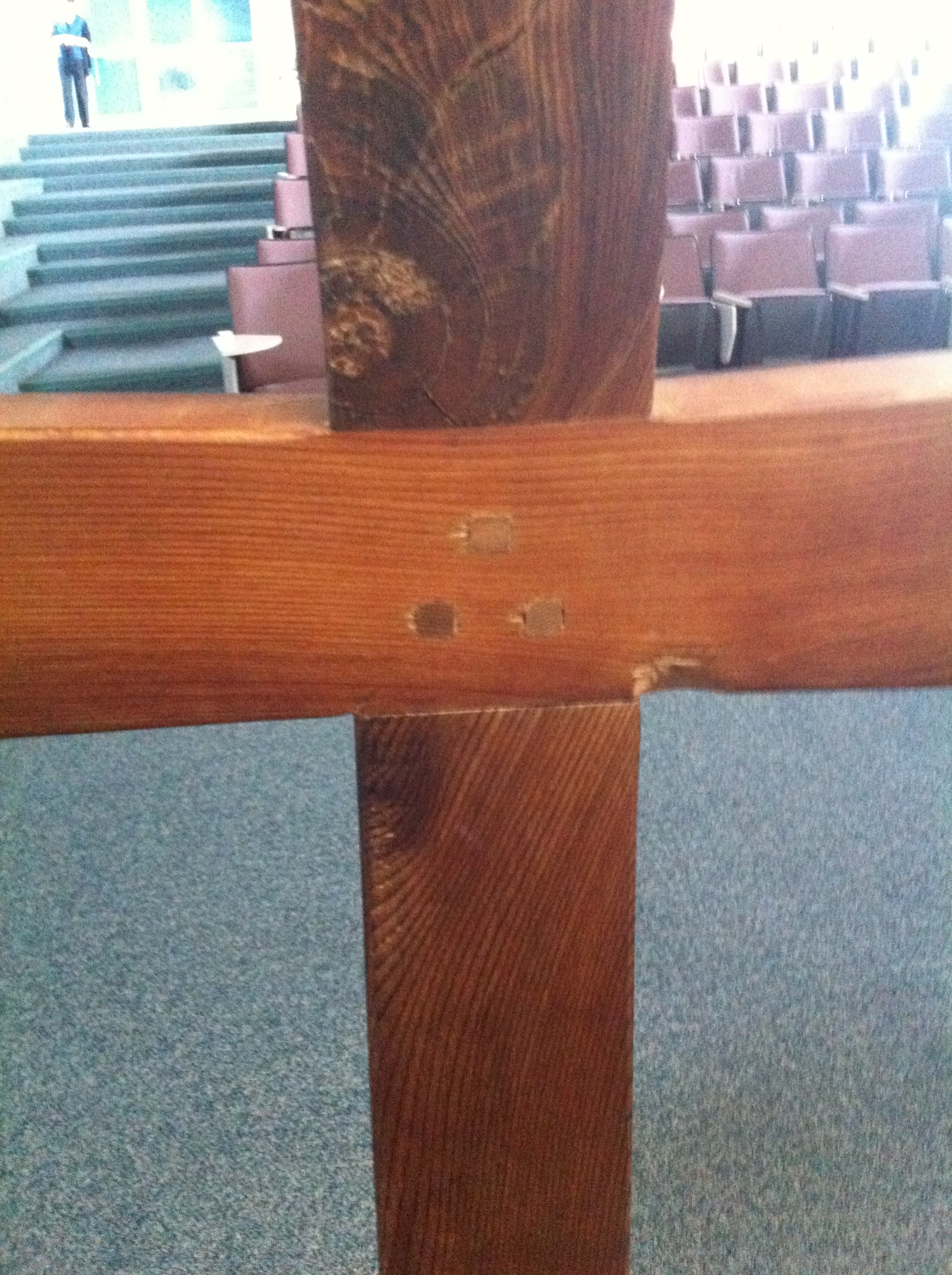
24And those who belong to Christ Jesus have crucified the flesh with its passions and desires. Galatians 5:24


…for a lifetime.


Crucifying the flesh is a life-time process. Its a long obedience, not a switch, a pill, a trick, or a special kind of self-improvement knowledge.


The Spirit of God creates a new desire in us to be like Jesus and to live always in response to His love. Maturing in Christ, requires us to keep  in step with the Spirit of God AND to crucify the flesh.


Paul does not mean for us to climb up on a cross. Instead we bring figuratively and in prayer our flesh, our old nature, with its own passions and desires to the Cross of Jesus. Paul says these are in conflict with what the Spirit of God desires in us.


The flesh will not be managed with new rules. It is in constant conflict with the Spirit of God. It must regularly be submitted to Christ Jesus our Lord.


The flesh must be mortified. The Spirit of God desires to create an environment in us suitable for the fruit of the Spirit and not the works of the flesh. Below are some of the conditions in which “the flesh” cannot thrive.


When we consider the Cross of Jesus and the love of God shown us as He  paid the penalty of our sin and made forgiveness accessible to all.


When we delight in our identity as His, since now in Christ we belong to HIm.


When we call sin what it is, identifying attitudes and actions that “miss the mark” moving us away and independent of God.


When we confess our sin and repent of it, turning away and changing our mind about it.


When we starve our fleshy desires by refusing to feed thoughts, memories, habits contrary to the grace Jesus has shown us.


Early in our walk with Jesus and in different seasons of life this process may be a struggle. At other seasons it may come to us with ease. This is not a process attempted in our own worked up guilt, shame or fear; these do not produce the freedom God desires. Rather, crucifying the flesh is a faith response to Jesus’ grace and truth empowered by His Spirit.