A Living House

Scripture:  1 Peter 2:4-5

4As you come to him, a living stone rejected by men but in the sight of God chosen and precious, 5you yourselves like living stones are being built up as a spiritual house, to be a holy priesthood, to offer spiritual sacrifices acceptable to God through Jesus Christ.

Observations:

Jesus is the “living stone” rejected by people.

Jesus is chose and precious to God.

Now you all, the Church are like living stones…

You all are being built up as a spiritual house.

You all are being built up to be a holy priesthood.

You all are being built up to offer spiritual sacrifices acceptable to God through Jesus Christ.

Application:

If our Lord Jesus who is the cornerstone of our faith and our life together was rejected by people it should not surprise us that the spirit of our age is to also reject His church.

But now just as precious as Jesus is the Heavenly Father so is the church precious to Him.  And, He is building us, adding to us, and occupying our life together.

We are being built by Jesus to be a spiritual house.  As such a house we are co-creators with Jesus to develop the environments in which God is honoured and people are healed.  Together we offer our lives as spiritual sacrifices to God (See Romans 12:1-4).  Our primary purpose is not to occupy buildings or even to build them.  Our primary purpose is to venture into the world as His people and participate in His occupation of human hearts.  As we are laying down our lives for His Kingdom He is building us up.

Prayer:

Heavenly Father, please send your Spirit and build the church of Jesus here so that a people are prepared for your Kingdom.  AMEN.
 

Consistency — its about the “who” and not the furniture

Three weeks ago we finished cocooning with our newest daughter and have now been out in the “real” world with great regularity.  The intent of cocooning was to establish consistency and attachment for Mica in our family.  The family becomes a referent point for her engagement with the world.

So here’s the real world for our church experience at Origin: for the last three weeks we’ve gathered in a different location every Sunday.  Different address.  Different set up.  Different washrooms.  Different children’s space.  Different lighting.  Different feel.  So much for consistency!

Its made me think a lot about her experience of the church.  Who reaches out?  Who prays for her?  Who creates safe space for her to be her, to explore, and to hear again that God loves her?  Who celebrates what God is doing in her life?  Who affirms her growth?  Who challenges her to explore again Jesus’ grace?

Who?

See its all about the people & the Gospel, not the furniture.

But its not just about her.  My hope is that our gathering and life together is a referent point for many students and the UBC community in their walk with Jesus.  Origin, church, wherever, and whenever we gather, is a community that acts as a reference point for people to encourage them to keep going with Jesus and His Gospel.

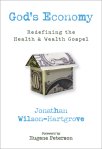
God’s Economy by Jonathon Wilson-Hartgrove

godseconomy1Author Jonathon Wilson-Hartgrove challenges people to enjoy the abundant life promised by Jesus Christ.  Jonathon’s book , God’s Economy: Redefining the Health and Wealth Gospel, is not your typical Health and Wealth Gospel being flogged by many in the Church today.  Rather, it is an attempt to express what Jonathon and others who are living in new monastic communities are experiencing as they take Jesus at His Word.  Jonathon understands Jesus’ call into relationship with Him as a salvation that secures not only forgiveness of sin and eternal life but also a salvation that secures participation in an alternative economy so that the abundant life is lived now.

Each of the “tactics” of the alternative economy presented by Jonathon enliven me and make me nervous.  Fortunately they are not Jonathon’s tactics, but Jesus’ commands to those who follow him.  The alternative economy moves according to these commands:

Tactic 1:  Subversive Service: How God’s Economy Slips In.  “If anyone wants to be first, he must be the very last, and the servant of all.”  Mark 9:35

Tactic 2:  Eternal Investments: How God’s Children Plan Ahead.  “Store up for yourselves treasure in heaven.”  Matthew 6:20

Tactic 3:  Economic Friendships: How Real Security Happens.  “I tell you, use worldly wealth to gain friends for yourselves.”  Luke 16:9

Tactic 4:  Relational Generosity: How We Share Good News.  “Give to the one who asks you.”  Mathew 5:42

Tactic 5: Gracious Politics: How to Live Under Occupation.  “Give to Caesar what is Caesar’s and to God what is God’s.”  Mark 12:17
I only completed my first reading of Jonathon’s book today.  But, I heartedly recommend God’s Economy to anyone who has handled money, to anyone who has been troubled by their own selfishness and greed, to anyone who wonders if Jesus really means for us to live better on less, and to anyone who is committed to being a Acts 2 community with a group of Christians.  God’s Economy is not really a how-to manual.  It is a confessional work, full of stories and testimonies of others who have entered into a generous and abundant life with Jesus and sought out, sometimes painfully–, how to live by faith in the One who owns the cattle on a thousand hills.

Open Source Activists and Leadership

J. R. Kerr has an excellent article on Open Source Activists and leadership in LeadershipJournal.net.  Internally I am conflicted.  I love it, crave it, and know that I do things that frustrate it around me.  At Cityview I hope we will keep working on it.  Here is an excerpt:

My generation is hungry for something more than the 15 principles for building a better team or the 21 reasons why you should be a servant leader. They are not content filling a role on a task force for church growth. They are hungry for more. They want a voice. They want influence. They are a generation that isn’t content receiving a vision; they want to be part of shaping and creating the vision. My generation believes in open source influence.

Open source is everywhere and it is changing the world. Thomas Friedman’s book The World is Flat documents the way open source is changing how software is developed and how news is reported. Past generations went to a trusted authority, like the Encyclopedia Britannica, to find answers to their questions. The new generation logs on to Wikipedia, an open source web encyclopedia that doesn’t just provide answers but allows users to contribute their knowledge as well. And the Apple iPhone now has thousands of user-created applications available as a result of becoming an open source platform. The younger generation expects to participate in the creation and formation of products and organizations in a way earlier generations simply did not.