Don’t Buy The Lie

Scripture:  1 Peter 2:6-8

6For it stands in Scripture:  “Behold, I am laying in Zion a stone, a cornerstone chosen and precious, and whoever believes in him will not be put to shame.”  7So the honor is for you who believe, but for those who do not believe, “The stone that the builders rejected has become the cornerstone,” 8and “A stone of stumbling, and a rock of offense.” They stumble because they disobey the word, as they were destined to do.

Observations:

In the Scripture God says He has a plan that involves His people of Israel, “Zion” — to lay down a chosen and precious cornerstone.  Whoever believes in Him will not be put to shame.  There is honour for those who believe.

Even though they others reject God’s chosen One, He will still become the “cornerstone” from whom their lives will be evaluated.  For those who do not believe in God’s cornerstone this “person” becomes a stumbling block; for they disobey God’s word.

Application:

The “cornerstone” is an architectural term.  The cornerstone becomes the reference point for the whole building.  What are you building?  A life?  A family?  A career?  An organization?  A nation?

Our culture brings tremendous pressure for the person of faith to live an unintegrated life.  Our culture treats faith as an appendix that should be surgically removed if it seems to cause us too much trouble. There is a temptation for leaders (Perhaps you don’t think of yourself as a leader, but you are;  the most difficult person for you to lead is yourself.) to make decisions seeking honour and some kind of vision of success without looking to Jesus.

If we buy the lie we will stumble over Christ and find that we are offended by Him.  We are so taken by the beauty of our own lofty visions that we stumble over the rough stone  on the ground right in front of us.

Seek the grace to obey His Word, and live your life with the confession “Jesus is Lord” as the reference for all the designs of your life.  We need the Joseph Principle(See the story of Joseph in Exodus), to trust that character forged through persistent obedience to God is the better payoff.  Looking to Jesus as the cornerstone of my life creates a longview and protects me from the seduction of short-term gains bought through rejection of Jesus and His ways.

Prayer:  

Heavenly Father have mercy on me.  Extend my view of life by giving me the grace to trust Jesus today.  He is the cornerstone of my faith and my life.  AMEN.
american myths and the real pilgrims

Happy Thanksgiving America.

Apparently, the first Pilgrims on the Mayflower were both devout and tolerant.  Great characteristics to possess and from which flow genuine liberty.

The Pilgrims – unlike British Puritans who wanted to turn Massachusetts into a theocracy – sharply advocated church-state separation. They heretically believed that women should be allowed to speak in church. They were far more tolerant of other faiths and open to the idea that their theology, like all human dogma, might contain errors.

Pilgrim experiences “in the cosmopolitan Netherlands are a reason they are less rigid or dogmatic in their views about what people must and must not do,” argues Jeremy Bangs, curator of the American Pilgrim Museum in Leiden and author of “Saints and Pilgrims,” a 900-page reappraisal published this year on the 400th anniversary of the Pilgrims’ arrival in Leiden.

“The pilgrims didn’t have witchcraft hysteria, they didn’t kill Quakers. These are big differences!” notes Mr. Bangs, a former curator of Plimoth Plantation whose work draws heavily from untapped Dutch and New England archives. “Pilgrim leaders were less prone to persecute…. The possibility that others may be right and they may be wrong is something influenced by their time living in an extraordinary community of other exiles in Holland.”

Read the whole article in the Christian Science Monitor.

The Color of Church

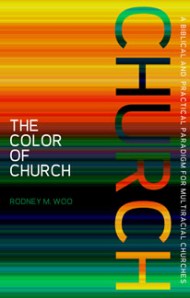
9780805448399_The Color of Church_cvr_webRecently I finished reading The Color of Church by Rodney Woo, pastor of Wilcrest Baptist Church, a multi-cultural congregation in Houston, Texas.  I appreciated both the biographical, theological, and practical work Woo presents and find that the book moves easily between these aspects to create an informative and helpful guide.   The Wilcrest story is exciting to consider because Woo and his team had to lead an “all white” congregation to not only accept people who were different from them but they also had to initiate changes that created space for different culture groups to find a voice in the leadership of the congregation.  Today people from over 40 different nations call Wilcrest their Church.

I had a seminary professor who would often say “good sociology does not necessarily equate to good theology.”  In response to the Gospel and Jesus’ mandate to reach the nations, urban churches must include the nations who are their neighbours.  However, the challenges inherent in leading an ethnically and culturally diverse congregation really only begin when one seriously ventures into cross-cultural relationships and missions.  Even in the hyper diverse setting of Vancouver, BC I find that many people manage their lives according to cultural familiarity.  Churches as social constructs either have diversity patterns in their DNA or they must make intentional efforts to re-engineer their DNA.  The later is quite difficult.

I believe that anyone who venture into the worthwhile “Revelation 7” vision of eternity for the church will benefit from reading Woo’s book.  Some urban  churches may discover that their community around them prefers the witness of a multi-ethnic congregation.  However the mono-ethnic church which shares strong people sense as a culture will struggle with the change required for a new generation of multicultural or multi-ethnic believers.  The church will need to create a strong sense of shared culture that values openness and change above their own cultural comforts.

Cultural familiarity is no longer defined by just ethnicity.  Many cities now have a growing mono-culture that expects cultural diversity as part of what it means to be a good human.  However, Woo’s experience in Houston is of reaching a highly segmented and sometimes racially charged setting with the Gospel.  I find the story of the past 17 years at Wilcrest to be exciting yet realistic.  Woo shares the learnings gained through not just their successes but also their failures.  The romanticization of multi-cultural church has a short honeymoon.  The following paragraph illustrates the challenge Wilcrest faced in developing “rules of engagement:”

One of the limitations of making adjustments in the heat of battle is that the leader makes a decision with only the knowledge that is available.  Even with the best of intentions, however, the decision does not always work out.  In the growing context of a multiracial congregation, an abundance of knowledge or wisdom is not readily accessible, so we have to learn through trial and error.  It is a slow and painful process, but it is necessary. (p. 166)

One of the strengths of the The Color of Church is the alignment of practical challenges of church life with biblical theology.  Woo has given the reader a window into the processes which turn the vision for multicultural and multi-ethnic churches into reality via real conflicts regarding the practical concerns of worship, leadership, decision-making, reconciliation, and mission.  Leaders sometimes, perhaps often, feel alone when they are captivated by a compelling vision; it is the same for leaders who desire to lead a thriving multi-ethnic congregation. The Color of Church will be a helpful resource for boards or teams of leaders who are searching for the language and processes that would facilitate the fulfillment of their dream.