Radical Love

Here are the notes from the New Testament Challenge Message at Cityview this weekend on Radical Love.

The Big Idea: Radical love flows from a gracious and just God.

“Love your enemies and pray for those who persecute you, that you may be sons of your Father in heaven.  He causes his sun to rise on the evil and the good, and sends rain on the righteous and the unrighteous.
Matthew 5:44-45

radical:  1) arising from or going to a root source
2) departing markedly from the norm or the culture

3) favouring or effecting fundamental or revolutionary changes

4) slang:  wonderful

1.  Jesus describes radical love as a product of knowing Him.

“A new command I give you:  Love one another.  As I have loved you, so you must love one another.  By this all men will know that you are my disciple, if you love one another.”  John 13:34-35

“My command is this:  Love each other as I have loved you.  Greater love has no one than this, that he lay down his life for his friends.  You are my friends if you do what I command.”  John 15:12-13

2.  The Sermon on the Mount, Matthew 5-7 is not another “law” from which we try to gain acceptance from God if we perfect it.  Rather the Sermon on the Mount is descriptive of the lifestyle that flows from a person being transformed (blessed) by Jesus Christ. As Jesus concludes the message the nature of this life becomes more clear:

Ask the Father for good gifts… Matthew 7:7-12
Enter the narrow gate for life… Matthew 7:13-14

Good tree bears good fruit/entry into
the Kingdom of heaven via knowing Jesus Matthew 7:15-23
Wise builder puts Jesus words into practice Matthew 7:43-48

3. The Sermon on the Mount does give us insight on what hinders us from loving people radically.

A.  Contempt for people, the bearers of God’s image.  Matt 5:21-26
B.  Lust, a desire to use people for selfish ends.  Matt 5:27-30
C.  Building throwaway relationships.  Matt 5:31-32

D.  Making throwaway promises, words.  Matt 5:33-37
E.  Vengeful justice-seeking.  Matthew 5:38-42
F.   Smallness, limiting love to those who love us.  Matt 5 43-48
G.  Desiring the applause of people over the applause of God.  6:1-18

H.  Valuing financial security over the works of God.  6:19-24
I.  Worrying over the stuff of earth over the kingdom of God.  6:25-
J.  Using other people’s failure as reason to elevate ourselves. 7:1-6

4. Jesus creates a window for us to see examples of Radical love:
A.  Seeks out a person who we have heart when we realize it.

B.  Interacts with people with out using them for selfish pleasures.

C.  Values people and seeks to maintain covenants even when tough.

D.  Speaks clearly and sincerely about one’s intentions.

E.  Gives people more good than they deserve.

F.  Pursues the highest good possible even for enemies.

G.  Doesn’t mind doing good without earthly recognition.

H.  Treasures what is close to the heart of God and invests in that.

I.   Trusts God with the details of life in order to realize God’s
Kingdom and righteousness.

J.   Recognizes one’s own desperate need from God’s mercy and
grace and humbly participates in His healing and restorative work
in another person’s life.

5. Jesus is The Source for Radical Love:

10 This is love: not that we loved God, but that he loved us and sent his Son as an atoning sacrifice for our sins. 11 Dear friends, since God so loved us, we also ought to love one another. 12 No one has ever seen God; but if we love one another, God lives in us and his love is made complete in us.

13 We know that we live in him and he in us, because he has given us of his Spirit. 14 And we have seen and testify that the Father has sent his Son to be the Savior of the world. 15 If anyone acknowledges that Jesus is the Son of God, God lives in him and he in God. 16 And so we know and rely on the love God has for us.   God is love. Whoever lives in love lives in God, and God in him. 17 In this way, love is made complete among us so that we will have confidence on the day of judgment, because in this world we are like him.   1 John 4:10-17
The Ministry of Forgiveness

Here are the notes from my talk today to Pastors/Staff at the Westcoast Baptist Association Prayer lunch.

The Ministry of Forgiveness

Bear with each other and forgive whatever grievances you may have against one another. Forgive as the Lord forgave you.  Colossians 3:13

If I were to write a book on The Minister and Forgiveness here is a rough outline of my chapter topics:

1.  The Minister receives forgiveness from God.

2.  The Minister gives forgiveness to people.

3.  The Minister receives forgiveness from people.

4.  The Minister models and teaches the forgiving life.

5.  The Minister conveys the forgiveness of God.

Jesus has set the work of forgiveness into the center of our prayer life.

One day Jesus was praying in a certain place. When he finished, one of his disciples said to him, “Lord, teach us to pray, just as John taught his disciples.”  He said to them, “When you pray, say:

“‘Father,

hallowed be your name,

your kingdom come.

Give us each day our daily bread.

Forgive us our sins,

for we also forgive everyone who sins against us.

And lead us not into temptation.'”

Luke 11:1-4

Matthew 5:23-24

23 “Therefore, if you are offering your gift at the altar and there remember that your brother has something against you, 24 leave your gift there in front of the altar. First go and be reconciled to your brother; then come and offer your gift.

Our capacity to minister fruitfully in the Gospel depends on our continuing experience of the grace and forgiveness of Jesus Christ.

5 This is the message we have heard from him and declare to you: God is light; in him there is no darkness at all. 6 If we claim to have fellowship with him yet walk in the darkness, we lie and do not live by the truth. 7 But if we walk in the light, as he is in the light, we have fellowship with one another, and the blood of Jesus, his Son, purifies us from all sin.

8 If we claim to be without sin, we deceive ourselves and the truth is not in us. 9 If we confess our sins, he is faithful and just and will forgive us our sins and purify us from all unrighteousness. 10 If we claim we have not sinned, we make him out to be a liar and his word has no place in our lives.  1 John 5:5-10

The ministry of forgiveness requires us to lead people wisely, firmly, and with respect to reorder their  relationships in Christian community.

5 If anyone has caused grief, he has not so much grieved me as he has grieved all of you, to some extent-not to put it too severely. 6 The punishment inflicted on him by the majority is sufficient for him. 7 Now instead, you ought to forgive and comfort him, so that he will not be overwhelmed by excessive sorrow. 8 I urge you, therefore, to reaffirm your love for him. 9 The reason I wrote you was to see if you would stand the test and be obedient in everything. 10 If you forgive anyone, I also forgive him. And what I have forgiven-if there was anything to forgive-I have forgiven in the sight of Christ for your sake, 11 in order that Satan might not outwit us. For we are not unaware of his schemes. 2 Corinthians 2:5-11

21 Again Jesus said, “Peace be with you! As the Father has sent me, I am sending you.”  22 And with that he breathed on them and said, “Receive the Holy Spirit. 23 If you forgive anyone his sins, they are forgiven; if you do not forgive them, they are not forgiven.”   John 20:21-23

In the ministry of forgiveness the church practices the ministry of healing prayer that accompanies confession.

Galatians  6:1-3

6:1 Brothers, if someone is caught in a sin, you who are spiritual should restore him gently. But watch yourself, or you also may be tempted. 2 Carry each other’s burdens, and in this way you will fulfill the law of Christ.

James 5:13-20

13 Is any one of you in trouble? He should pray. Is anyone happy? Let him sing songs of praise. 14 Is any one of you sick? He should call the elders of the church to pray over him and anoint him with oil in the name of the Lord. 15 And the prayer offered in faith will make the sick person well; the Lord will raise him up. If he has sinned, he will be forgiven. 16 Therefore confess your sins to each other and pray for each other so that you may be healed. The prayer of a righteous man is powerful and effective.

17 Elijah was a man just like us. He prayed earnestly that it would not rain, and it did not rain on the land for three and a half years. 18 Again he prayed, and the heavens gave rain, and the earth produced its crops.

19 My brothers, if one of you should wander from the truth and someone should bring him back, 20 remember this: Whoever turns a sinner from the error of his way will save him from death and cover over a multitude of sins.   NIV

In the ministry of forgiveness the minister of the Gospel sometimes may need to lead others into the process of forgiveness and healing by “leading from who we represent” to them.

“I am so sorry _______________ happened to you.  I believe what __________ did is wrong.  I wonder if you would forgive ___________ and enter into the freedom that Christ wants you to enjoy.  When you forgive you are not saying that ________ is OK or right.  Rather you are saying that ________ no longer owes you anything because of Jesus’s love in your life.  So could we enter together now into prayer and ask God to help you forgive and to enjoy your freedom in Christ?”

Forgiveness and Prayer Exercises of Examine

Search me, O God, and know my heart; test me and know

my anxious thoughts.  See if there is any offensive way in me,

and lead me in the way everlasting.   Psalm 139:23-24

1. Ask God to search you and reveal any sin to confess to Him and to receive forgiveness.
2. Ask God to search you and to reveal any relationships and offenses for which you need to forgive.

Parent/s
Spouse
Children
Extended Family
Neighbours
Friends
Co-workers/Bosses
Church
Organizations/Businesses
People-groups
Countries
Governments

3. Ask God to search you and to reveal any relationships in which you need to confess your wrong and ask for forgiveness.

4. Forgiveness is a process we enter into in response to the Gospel.  Ask God for His grace to sustain you through the process.

2 Corinthians 12:8-10

8 Three times I pleaded with the Lord to take it away from me. 9 But he said to me, “My grace is sufficient for you, for my power is made perfect in weakness.” Therefore I will boast all the more gladly about my weaknesses, so that Christ’s power may rest on me. 10 That is why, for Christ’s sake, I delight in weaknesses, in insults, in hardships, in persecutions, in difficulties. For when I am weak, then I am strong.

Personal Thoughts on Dalai Lama Center, Peace Summit, Vancouver 2009

In a few days Vancouver will be inundated with people who have demonstrated with their life a commitment to improving the lives of others and building a life of peace.  The Peace Summit, Vancouver 2009, sponsored by the Dalai Lama Center in Vancouver has drawn together an extraordinary group of people for dialogue in both public and private conversations. The Epoch times has an informative article listing and describing the participants which include the Dalai Lama, and Noble Peace Prize Laureates, Desmond Tutu, Jody Williams, and Mairead Maguire.

I was recently asked what I thought about the event.  Here are a few personal observations and the perspectives that shape them–just looking in before it gets started:

1.  The Summit is a remarkable celebration of LIBERTY.  As a philosophical construct informed from a Christian worldview, liberty demands that people be free to hold exclusive and divergent positions or truth claims while maintaining the dignity and high value of all humanity in respectful interactions.  Where liberty is most graciously practiced tension abounds–especially for those who observe people with divergent truth-claims getting along and planning to do good together.

2.  The Summit promotes the difficult task of PEACEMAKING.  The values and competencies required to make peace in a world of hostility will be discussed and made available through the event.  Relational reconciliation begins in our own neighbourhoods and cities.  To break dividing walls of hostility is not an easy task and requires “wisdom from heaven.”  Jesus calls his followers to respond to His grace with lives that promote peace; he said, “Blessed are the peacemakers, for they will be called sons of God.”  And James writes,

13 Who is wise and understanding among you? Let him show it by his good life, by deeds done in the humility that comes from wisdom. 14 But if you harbor bitter envy and selfish ambition in your hearts, do not boast about it or deny the truth. 15 Such “wisdom” does not come down from heaven but is earthly, unspiritual, of the devil. 16 For where you have envy and selfish ambition, there you find disorder and every evil practice.

17 But the wisdom that comes from heaven is first of all pure; then peace-loving, considerate, submissive, full of mercy and good fruit, impartial and sincere. 18 Peacemakers who sow in peace raise a harvest of righteousness.  NIV (James 3:13-18)

3.  The Summit is a reflection of COMMON GRACE.  From the perspective of a Christian worldview I see the Peace Summit as a possibility only because of God’s gracious kindness toward all humanity who desires that all would come to repentance and faith in Jesus Christ.  Notice the gift of peace for people that Christians are to seek in prayer as described in 1 Timothy 2:1-6

2:1 I urge, then, first of all, that requests, prayers, intercession and thanksgiving be made for everyone- 2 for kings and all those in authority, that we may live peaceful and quiet lives in all godliness and holiness. 3 This is good, and pleases God our Savior, 4 who wants all men to be saved and to come to a knowledge of the truth. 5 For there is one God and one mediator between God and men, the man Christ Jesus, 6 who gave himself as a ransom for all men-the testimony given in its proper time.  (NIV)

2:1 I urge, then, first of all, that requests, prayers, intercession and thanksgiving be made for everyone- 2 for kings and all those in authority, that we may live peaceful and quiet lives in all godliness and holiness. 3 This is good, and pleases God our Savior, 4 who wants all men to be saved and to come to a knowledge of the truth. 5 For there is one God and one mediator between God and men, the man Christ Jesus, 6 who gave himself as a ransom for all men-the testimony given in its proper time.
NIV

4.  The Summit is a RELIGIOUS event.  Participants, including the Dalai Lama come to the Summit from their own worldview and construct of faith either in themselves, or a set of principles greater themselves, or in a god.  If we understand spirituality as the pursuit required to integrate what we see with what we don’t see then one could say this is a SPIRITUAL event as well.  James, the half-brother of Jesus, writes to the churches that “Religion God our Father accepts as pure and faultless is this:  to look after orphans and widows in their distress and to keep oneself from being polluted by the world.” (James 1:27)  Religion though is most often an exercise in self-justification, self-righteousness, and self-awareness.  When either of these selves is threatened it turns quickly to the desires for power and control in order to maintain this idolatry or balance of a self-satisfied life.  A spirituality flowing out of the Gospel of Jesus Christ will be categorically different in its realization that justification, righteousness and awareness are secured in Christ.  As a resident of a City (Vancouver) that has many who long to be good, I can observe with the Apostle Paul that God has worked in the hearts of humanity a record of His Law or way:  “Indeed, when Gentiles, who do not have the law, do by nature things required by the law, they are a law for themselves, even though they do not have the law, since they show that the requirements of the law are written on their hearts, their consciences also bearing witness, and their thoughts now accusing , now even defending them.”  (Romans 2:14-15)  One of the stated goals of the Dalai Lama Center for Peace and Education is the “education of the heart;” participants will be encouraged to explore and develop personal peace from which will hopefully flow compassion for others; that’s religion at its best.  Not a GOSPEL event but a RELIGIOUS event.

5.  The Peace Summit reminds me of the SUPREMACY OF CHRIST.  The followers of Jesus even from the first century have entered into the real and sometimes figurative Areopagus (See Acts 17:16-34)  in order to proclaim the reality and the meaning of the resurrection of Jesus Christ.  The exchange of ideas in the marketplace is exciting and sometimes costly.  Love and Truth do mix.  Our Vancouver- Canadian apprehension of conflict will be challenged by the public exchange of ideas that the Peace Summit elicits.  From the Christian worldview, Christians live their lives in response to Jesus Christ because of His “work” on the cross and His resurrection that confirmed and completed His work.  Jesus is our Prince of Peace.  He brings a peace that the world cannot give.  He brings a peace with God that transcends all other realities.  I don’t want to pretend about the realities of conflict like those who say, “Peace, Peace, where there is no peace.”  (See Jeremiah 6:14)  The claims of Christ are in direct conflict with the dominant messages of spiritual self-sufficiency.  The Apostles who functioned in a world of diverse ideas and claims to truth show us how to live as followers of Jesus Christ:  test the spirits, discern the truth, act in love.    See 1 John 4:1-21 below.

4:1 Dear friends, do not believe every spirit, but test the spirits to see whether they are from God, because many false prophets have gone out into the world. 2 This is how you can recognize the Spirit of God: Every spirit that acknowledges that Jesus Christ has come in the flesh is from God, 3 but every spirit that does not acknowledge Jesus is not from God. This is the spirit of the antichrist, which you have heard is coming and even now is already in the world.

4 You, dear children, are from God and have overcome them, because the one who is in you is greater than the one who is in the world. 5 They are from the world and therefore speak from the viewpoint of the world, and the world listens to them. 6 We are from God, and whoever knows God listens to us; but whoever is not from God does not listen to us. This is how we recognize the Spirit of truth and the spirit of falsehood.

7 Dear friends, let us love one another, for love comes from God. Everyone who loves has been born of God and knows God. 8 Whoever does not love does not know God, because God is love. 9 This is how God showed his love among us: He sent his one and only Son into the world that we might live through him. 10 This is love: not that we loved God, but that he loved us and sent his Son as an atoning sacrifice for our sins. 11 Dear friends, since God so loved us, we also ought to love one another. 12 No one has ever seen God; but if we love one another, God lives in us and his love is made complete in us.

13 We know that we live in him and he in us, because he has given us of his Spirit. 14 And we have seen and testify that the Father has sent his Son to be the Savior of the world. 15 If anyone acknowledges that Jesus is the Son of God, God lives in him and he in God. 16 And so we know and rely on the love God has for us.

God is love. Whoever lives in love lives in God, and God in him. 17 In this way, love is made complete among us so that we will have confidence on the day of judgment, because in this world we are like him. 18 There is no fear in love. But perfect love drives out fear, because fear has to do with punishment. The one who fears is not made perfect in love.

19 We love because he first loved us. 20 If anyone says, “I love God,” yet hates his brother, he is a liar. For anyone who does not love his brother, whom he has seen, cannot love God, whom he has not seen. 21 And he has given us this command: Whoever loves God must also love his brother.  NIV

Recent articles:

Vancouver Sun writer Douglas Todd explores the three goals of the Peace Summit.

The Color of Church

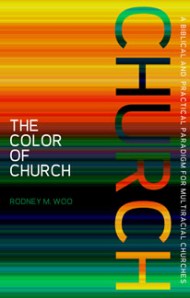
9780805448399_The Color of Church_cvr_webRecently I finished reading The Color of Church by Rodney Woo, pastor of Wilcrest Baptist Church, a multi-cultural congregation in Houston, Texas.  I appreciated both the biographical, theological, and practical work Woo presents and find that the book moves easily between these aspects to create an informative and helpful guide.   The Wilcrest story is exciting to consider because Woo and his team had to lead an “all white” congregation to not only accept people who were different from them but they also had to initiate changes that created space for different culture groups to find a voice in the leadership of the congregation.  Today people from over 40 different nations call Wilcrest their Church.

I had a seminary professor who would often say “good sociology does not necessarily equate to good theology.”  In response to the Gospel and Jesus’ mandate to reach the nations, urban churches must include the nations who are their neighbours.  However, the challenges inherent in leading an ethnically and culturally diverse congregation really only begin when one seriously ventures into cross-cultural relationships and missions.  Even in the hyper diverse setting of Vancouver, BC I find that many people manage their lives according to cultural familiarity.  Churches as social constructs either have diversity patterns in their DNA or they must make intentional efforts to re-engineer their DNA.  The later is quite difficult.

I believe that anyone who venture into the worthwhile “Revelation 7” vision of eternity for the church will benefit from reading Woo’s book.  Some urban  churches may discover that their community around them prefers the witness of a multi-ethnic congregation.  However the mono-ethnic church which shares strong people sense as a culture will struggle with the change required for a new generation of multicultural or multi-ethnic believers.  The church will need to create a strong sense of shared culture that values openness and change above their own cultural comforts.

Cultural familiarity is no longer defined by just ethnicity.  Many cities now have a growing mono-culture that expects cultural diversity as part of what it means to be a good human.  However, Woo’s experience in Houston is of reaching a highly segmented and sometimes racially charged setting with the Gospel.  I find the story of the past 17 years at Wilcrest to be exciting yet realistic.  Woo shares the learnings gained through not just their successes but also their failures.  The romanticization of multi-cultural church has a short honeymoon.  The following paragraph illustrates the challenge Wilcrest faced in developing “rules of engagement:”

One of the limitations of making adjustments in the heat of battle is that the leader makes a decision with only the knowledge that is available.  Even with the best of intentions, however, the decision does not always work out.  In the growing context of a multiracial congregation, an abundance of knowledge or wisdom is not readily accessible, so we have to learn through trial and error.  It is a slow and painful process, but it is necessary. (p. 166)

One of the strengths of the The Color of Church is the alignment of practical challenges of church life with biblical theology.  Woo has given the reader a window into the processes which turn the vision for multicultural and multi-ethnic churches into reality via real conflicts regarding the practical concerns of worship, leadership, decision-making, reconciliation, and mission.  Leaders sometimes, perhaps often, feel alone when they are captivated by a compelling vision; it is the same for leaders who desire to lead a thriving multi-ethnic congregation. The Color of Church will be a helpful resource for boards or teams of leaders who are searching for the language and processes that would facilitate the fulfillment of their dream.

New Testament Challenge, Introduction

Here are the published notes for Sunday’s talk at Cityview.

The Big Idea: Jesus is the New Testament Challenge!

“The next day John saw Jesus coming toward him and said, ‘Look the Lamb of God, who takes away the sin of the world!’”  John 1:29

1. Getting to know someone requires their self-disclosure.  When we talk about getting to know God in the Christian worldview,  we speak of  the self-disclosure of God.  We can know only what God reveals about Himself.

“The LORD has made his salvation known and revealed his righteousness to the nations.”  Psalm 98:2

Creation                                             ALL POINTING TO JESUS CHRIST.
Scripture
Covenants
History of Israel
History of the Church

2. The Christian Worldview accepts the Bible as God’s revelation of Himself and what He is doing in the world.  The Bible is the primary documents from which we see WHO Jesus Christ is and see WHAT He is doing in the world.

“You diligently study the Scriptures because you think that by them you possess eternal life. These are the Scriptures that testify about me, yet you refuse to come to me to have life.”  John 5:39-40
3.  Our challenge is to treat the Bible as inspired, trustworthy, true, and
authoritative Word of God and therefore to adjust our lives accordingly.

“Do not merely listen to the word and so deceive yourselves.  Do what it
says.”  James 1:22

“Do your best to present yourself to God as one approved, a workman
who does not need to be ashamed and who correctly handles the word
of truth.”  2 Timothy 2:15

4. The Word of God comes with benefits.

“The man who looks intently into the perfect law that gives freedom, and continues to do this, not forgetting what he has heard, but doing it—he will be blessed in all he does.”  James 1:25

“All Scripture is God-breathed and is useful for teaching, rebuking, correcting and training in righteousness, so that the man of God may be thoroughly equipped for every good work.”  2 Timothy 3:16-17

“Now that you have purified yourselves by obeying the truth so that you have sincere love for your brothers, love one another deeply from the heart.  For you have been born again, not of perishable seed, but of imperishable, through the living and enduring word of God.  For ‘All men are like grass, and all their glory is like the flowers of the field; the grass withers and the flowers fall, but the word of the Lord stands forever.”  1 Peter 1:22-25

5. Get to know Jesus through the Word of God.

A.  Read it.

I commit to take the New Testament Challenge.
I will read the New Testament through in 83 days.

When:  _________________________________
Where:  _________________________________

B.  Apply it together.

I will be a part of a Growth Group.
My group meets on ____________ at __________PM.

C.  Pray it.   This is the confidence we have in approaching God: that if
we ask anything according to his will, he hears us. 15 And if we know
that he hears us-whatever we ask-we know that we have what we asked of him.   1 John 5:14-15
D.  Share it.  See Mark 4.
E.  Receive Jesus as Lord.

“I tell you the truth, whoever hears my word and believes him
who sent me has eternal life and will not be condemned; he has
crossed over from death to life.  John 5:24-25